Climate Change: A Threat to Life!
What is Climate Change?
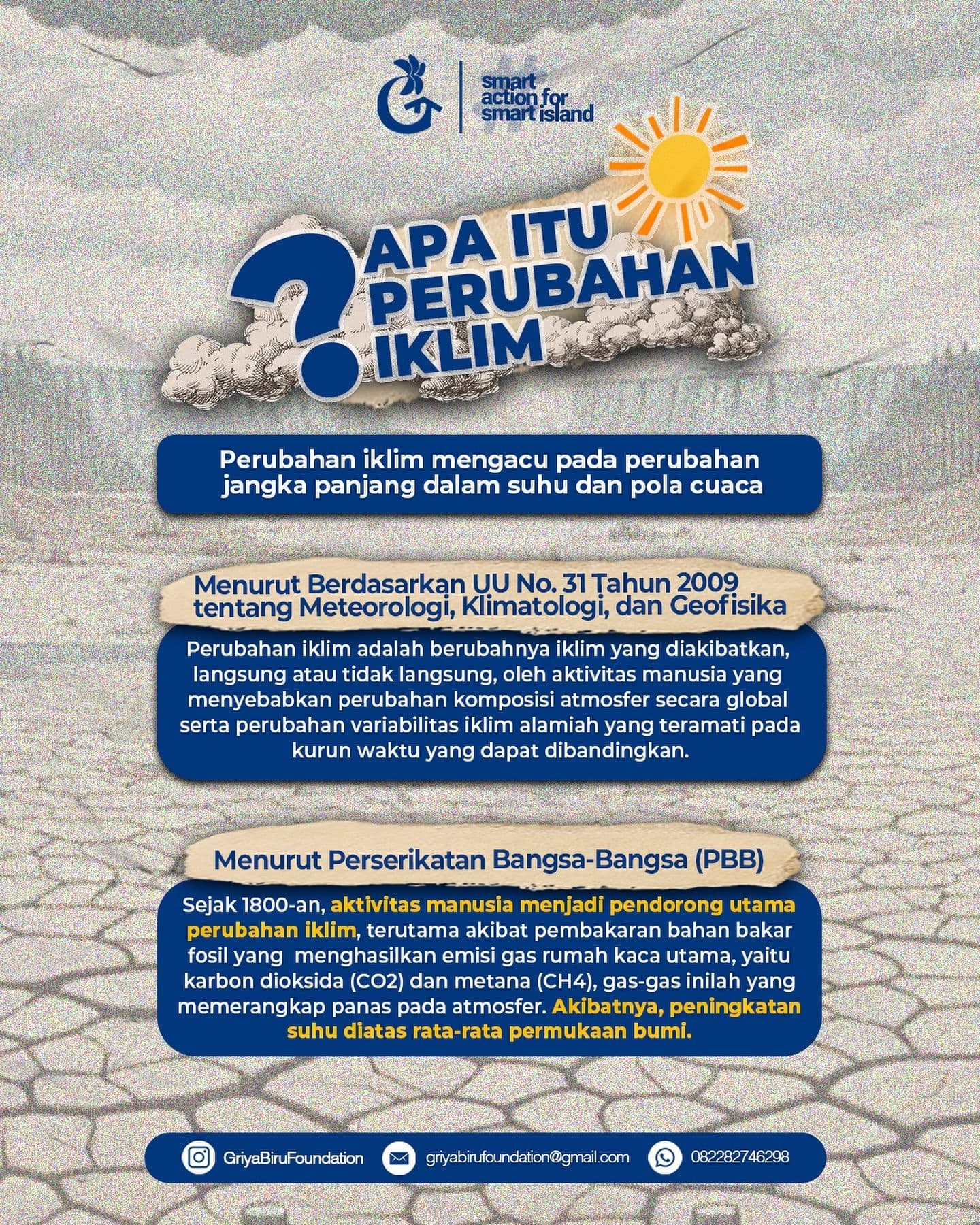
Climate change refers to long-term shifts in temperatures and weather patterns.
Based on Law No. 31 of 2009 concerning Meteorology, Climatology, and Geophysics, climate change is a change in climate caused, directly or indirectly, by human activities that result in global changes in atmospheric composition as well as changes in observed natural climate variability over a comparable period.
According to the United Nations (UN), since the 1800s, human activities have been the main driver of climate change, primarily due to the burning of fossil fuels which produces major greenhouse gas emissions, namely carbon dioxide ($CO_2$) and methane ($CH_4$). These gases trap heat in the atmosphere. As a result, there is an increase in temperature above the Earth's average surface.
Indonesia and Global Carbon Emissions
In the 2022–2023 period, Indonesia ranked 7th as the largest emitting country in the world. Indonesia produced 1.1 billion tons of emissions (or in some records around 700 million tons of annual emissions with an 18.3% increase from the previous year—the highest increase compared to other countries).
Here are the top 10 largest emitting countries in the world (2022–2023):
1. China: 11.4 Billion Tons
2. United States: 5.1 Billion Tons
3. India: 2.8 Billion Tons
4. EU27 (European Union): 2.8 Billion Tons
5. Russia: 1.7 Billion Tons
6. Japan: 1.7 Billion Tons
7. Indonesia: 1.1 Billion Tons
8. Iran: 700 Million Tons
9. Saudi Arabia: 700 Million Tons
10. Germany: 700 Million Tons
What Causes High Emissions in Indonesia?
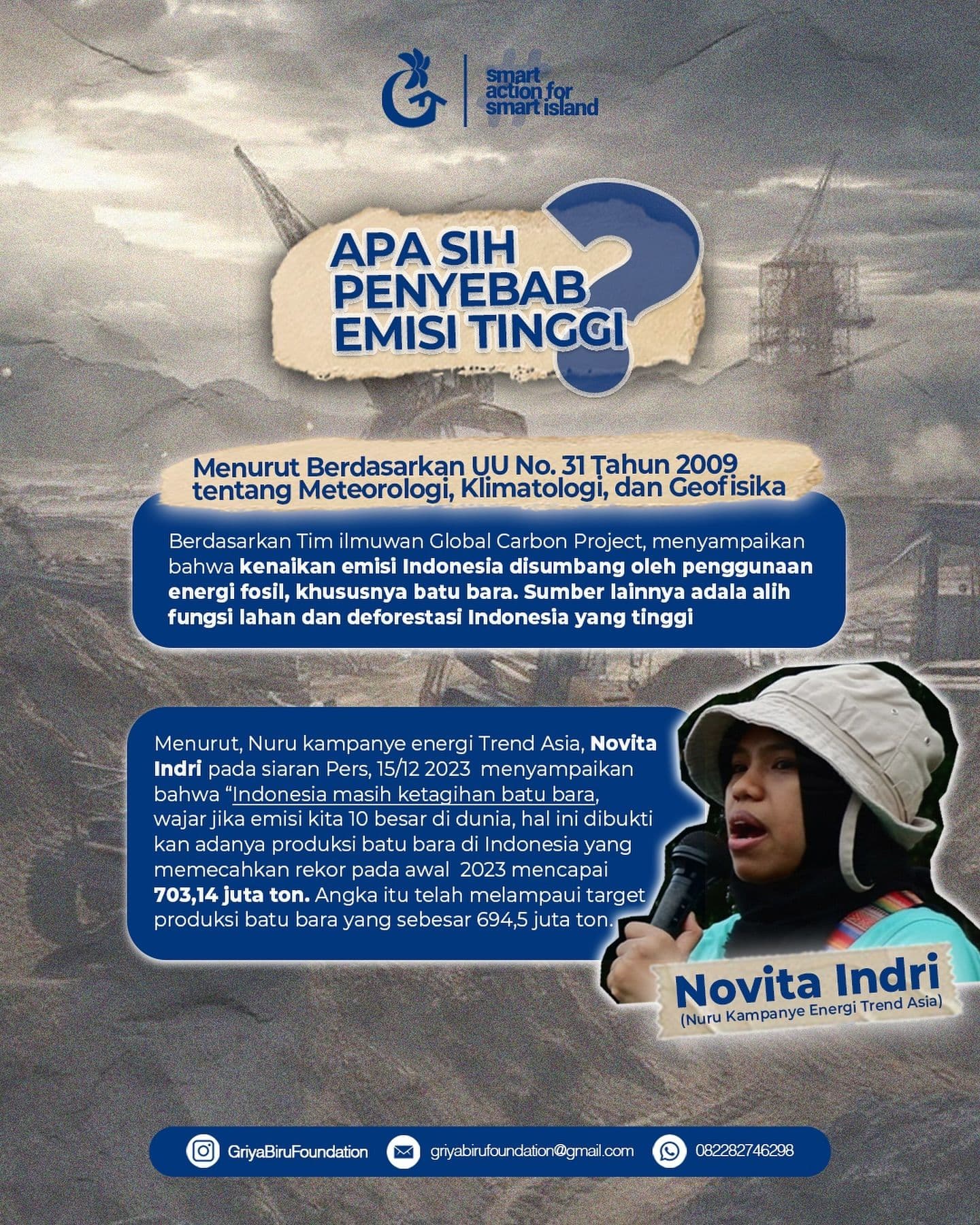
According to the Global Carbon Project team of scientists, Indonesia's emission increase is contributed by the use of fossil energy, particularly coal. Another source is land-use change and high rates of deforestation.
Novita Indri (Trend Asia Energy Campaigner) stated in a press release (15/12/2023) that "Indonesia is still addicted to coal, it is natural that our emissions are in the world's top 10." This is evidenced by Indonesia's coal production breaking a record in early 2023 reaching 703.14 million tons, exceeding the national production target of 694.5 million tons.
Largest Emitting Industry Sectors in Indonesia (2022–2023)
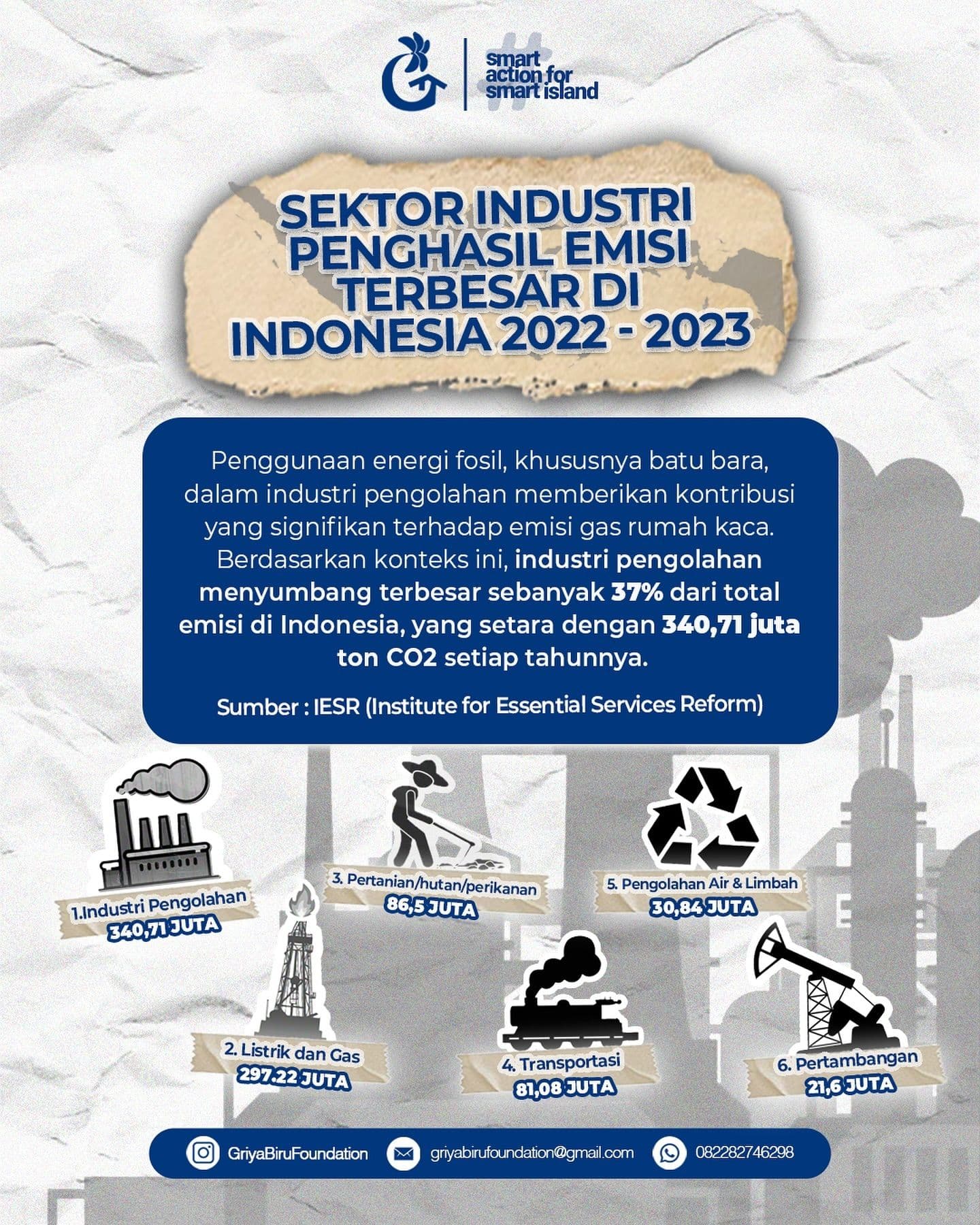
According to the Institute for Essential Services Reform (IESR), the use of fossil energy in the manufacturing industry contributes most significantly to greenhouse gas emissions.
Breakdown of industrial sector contributions:
1. Manufacturing Industry: Contributes 37% of total emissions in Indonesia, equivalent to 340.71 million tons of $CO_2$ per year.
2. Electricity and Gas: 297.22 Million Tons
3. Agriculture, Forestry, & Fisheries: 86.5 Million Tons
4. Transportation: 81.08 Million Tons
5. Water & Waste Management: 30.84 Million Tons
6. Mining: 21.6 Million Tons
Impact on Land and Oceans, Impact on Land and Economy
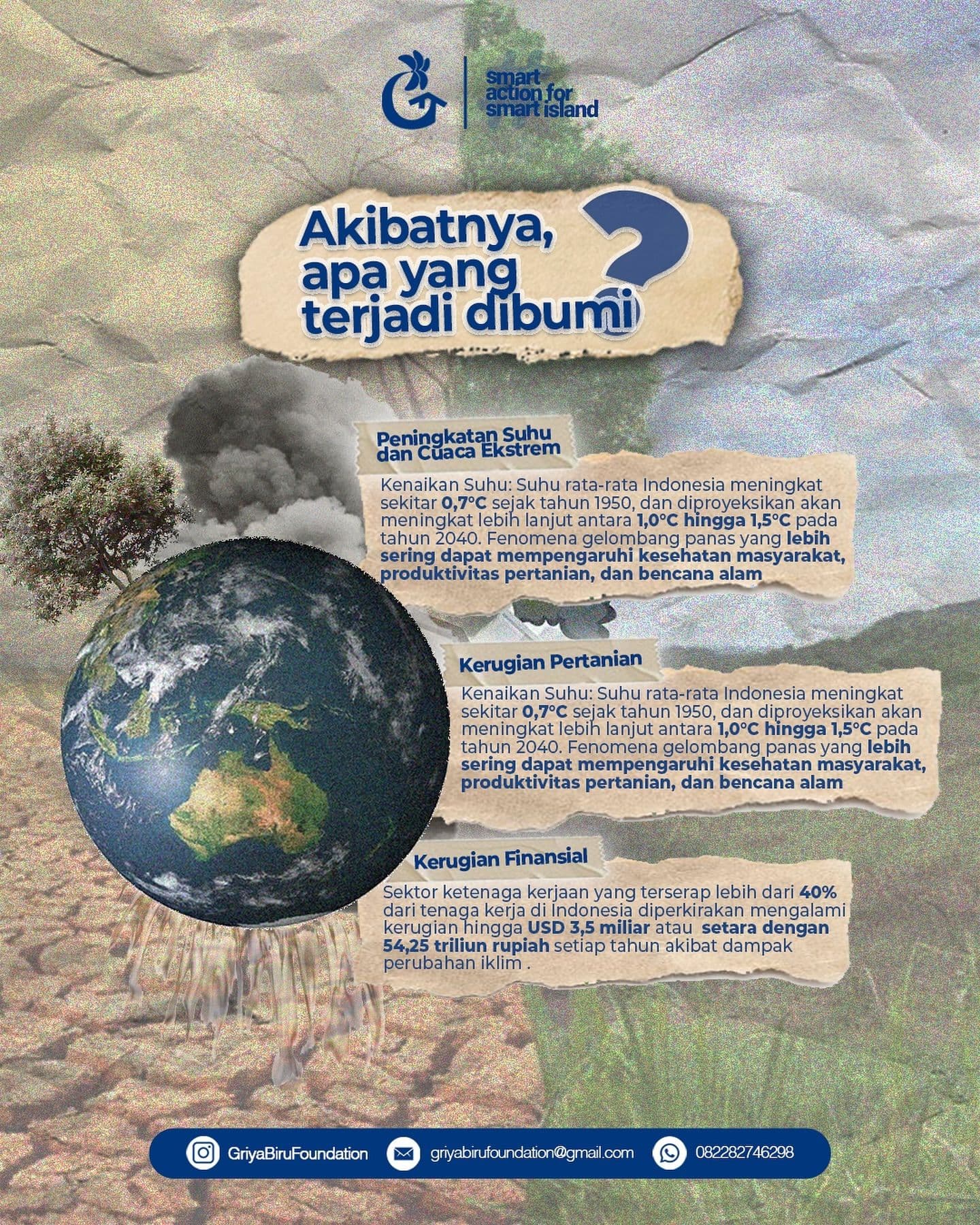
- Temperature Increase & Extreme Weather: The average temperature in Indonesia has increased by about 0.7°C since 1950 and is projected to increase further between 1.0°C and 1.5°C by 2040. More frequent heatwaves can disrupt public health, agricultural productivity, and trigger natural disasters.
- Financial Losses: The labor sector, which absorbs more than 40% of the workforce in Indonesia, is estimated to experience losses of up to USD 3.5 billion (equivalent to IDR 54.25 trillion) annually due to the impacts of climate change.
Ocean Conditions and Biodiversity
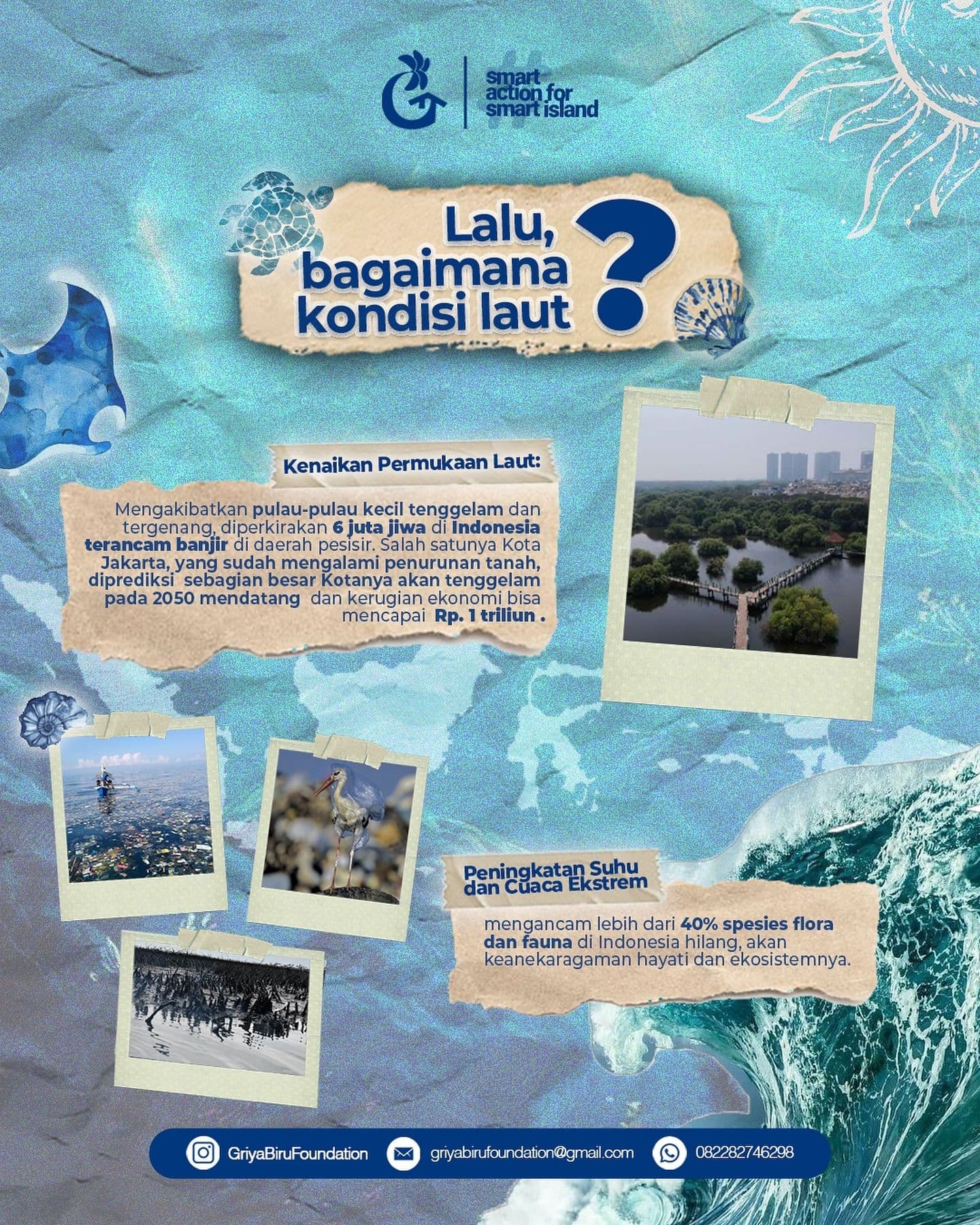
• Sea Level Rise: Causes small islands to sink and become inundated. An estimated 6 million people in Indonesia are threatened by coastal flooding. One of them is the City of Jakarta, which is experiencing land subsidence and is predicted to have most of its area submerged by 2050 with potential economic losses reaching IDR 1 trillion.
• Threat to Biodiversity: Temperature increases and extreme weather threaten more than 40% of flora and fauna species in Indonesia with potential extinction, damaging biodiversity and marine ecosystems.
Message to Corporate Leaders
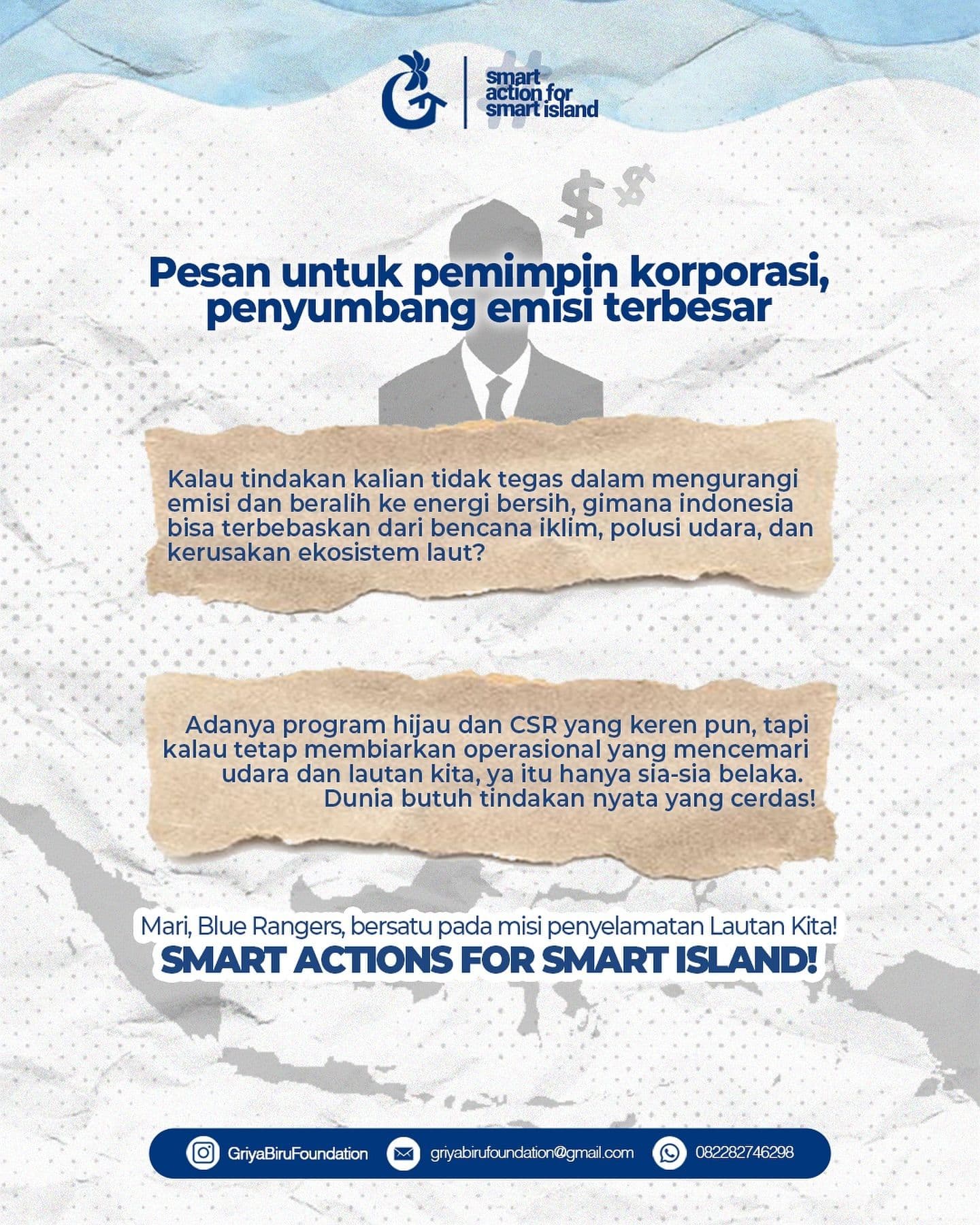
As the largest emitter, decisive action from corporate leaders is eagerly awaited. Without real commitment to reduce emissions and transition to clean energy, Indonesia will struggle to escape climate disasters, air pollution, and marine ecosystem destruction.
"Green" programs and CSR will mean nothing if the company's main operations continue to pollute the air and oceans. The world needs real smart actions (Smart Actions for Smart Island).
Come on, Blue Rangers, unite on the mission to save Our Oceans!