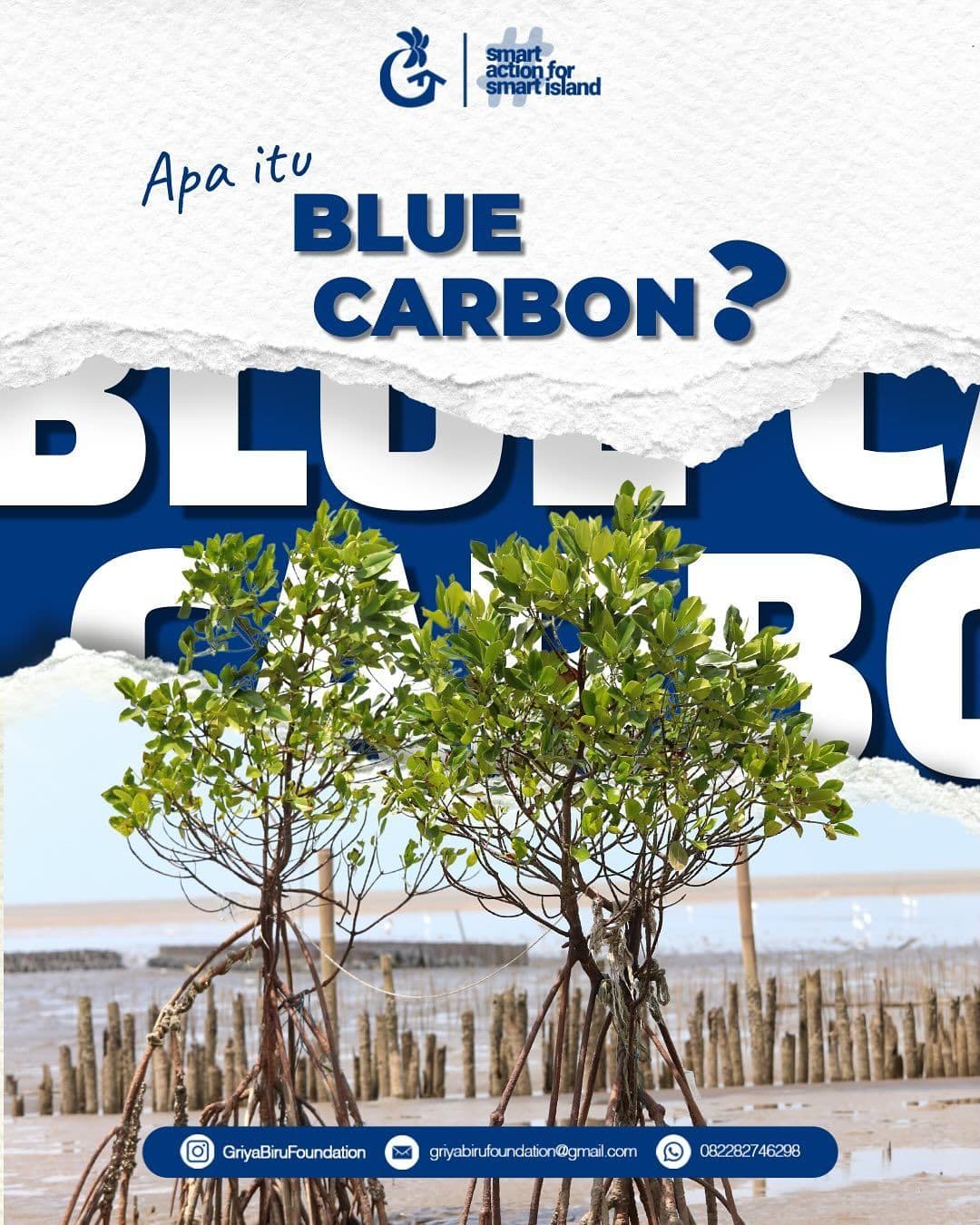
Infographic: What is BLUE CARBON?
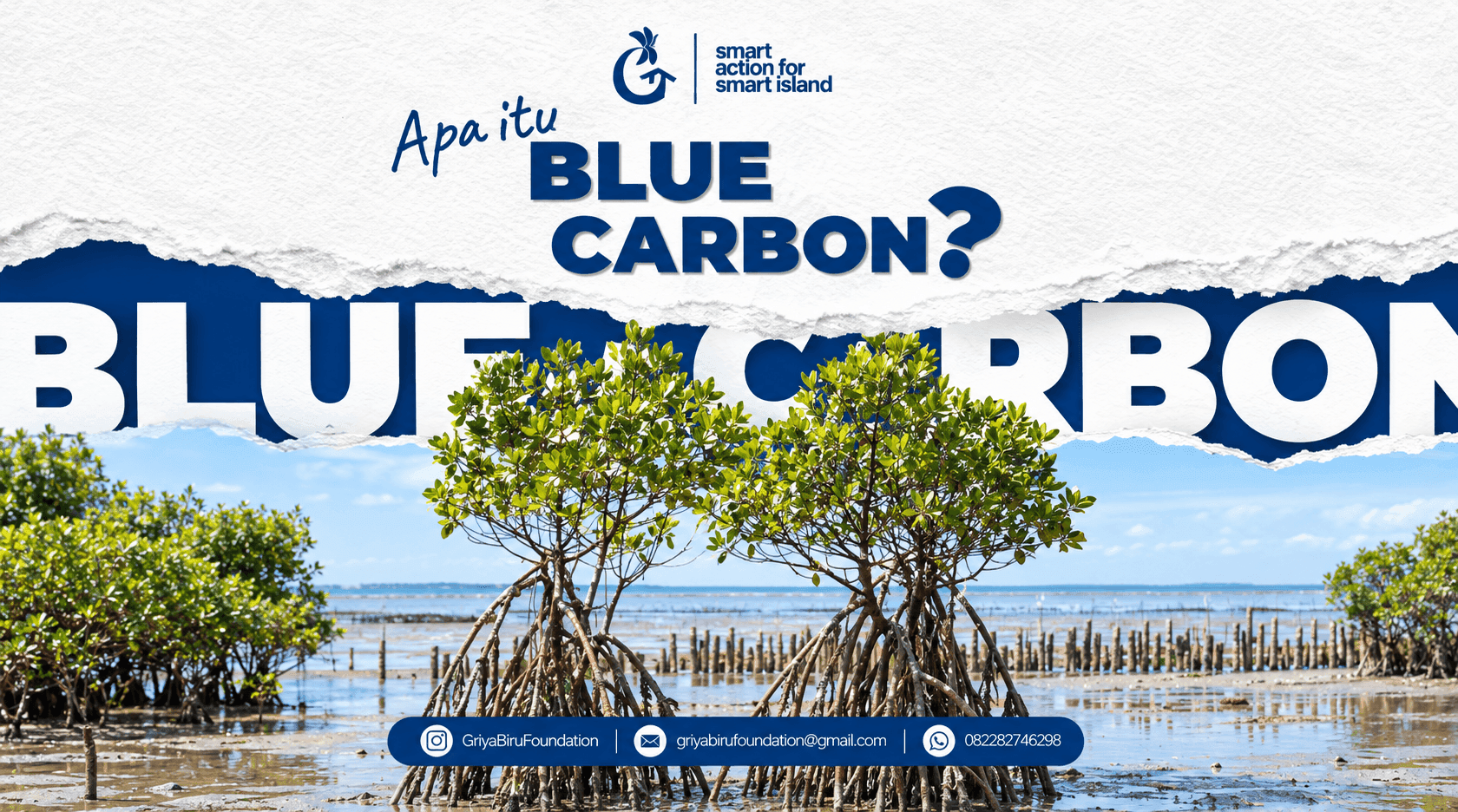
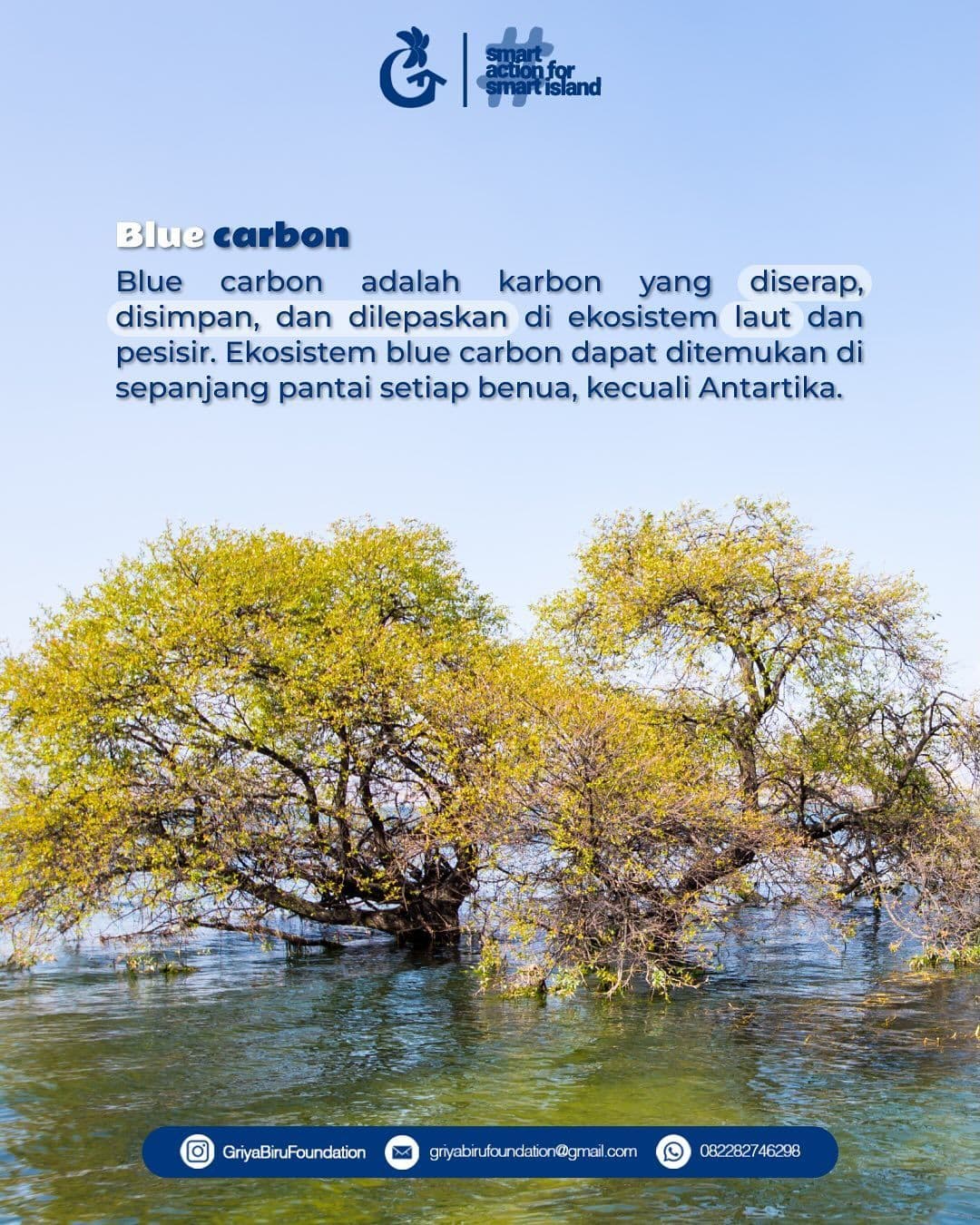
Blue carbon is carbon absorbed, stored, and released in marine and coastal ecosystems. Blue carbon ecosystems can be found along the coast of every continent, except Antarctica.
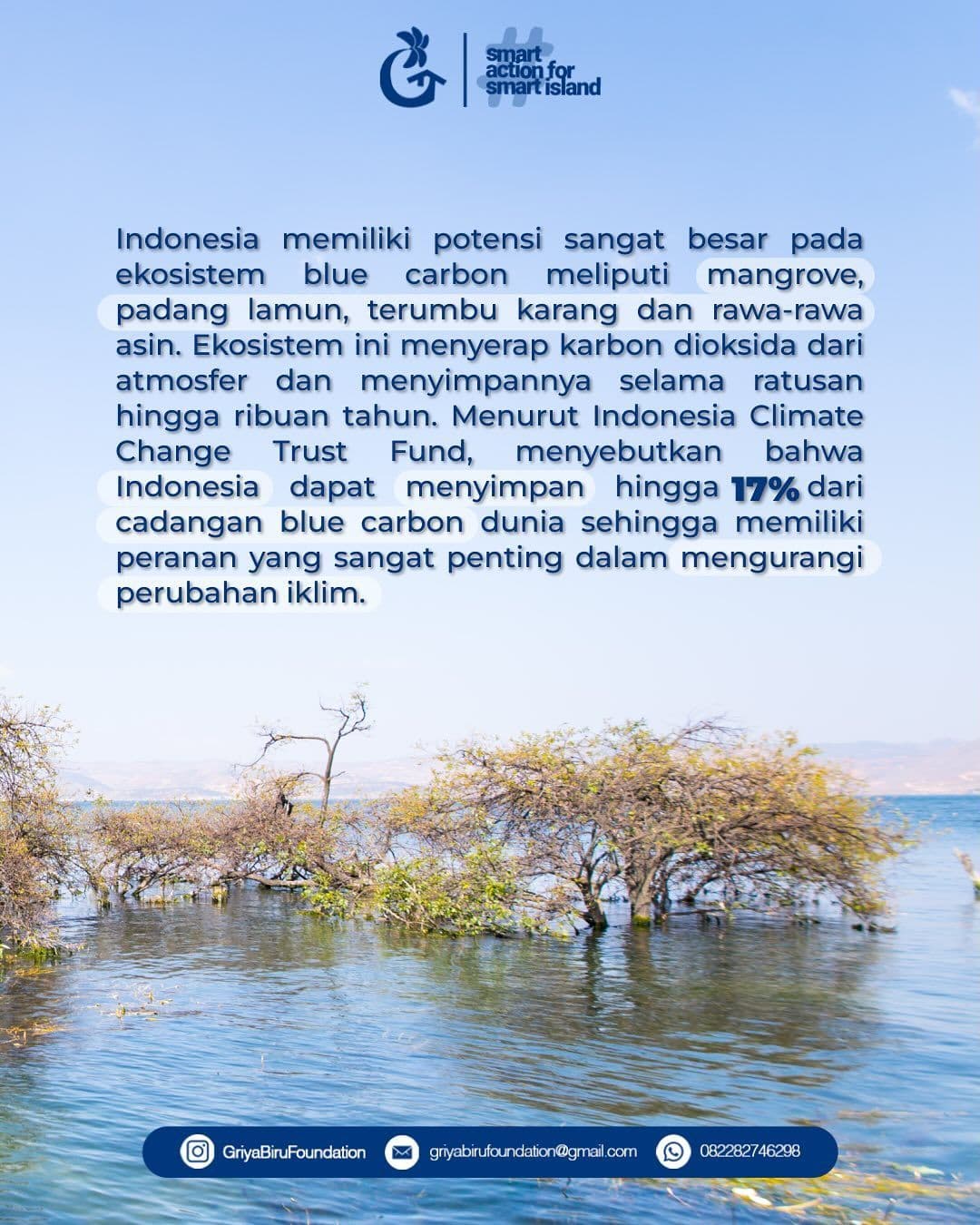
Indonesia has enormous potential in blue carbon ecosystems, including mangroves, seagrass meadows, coral reefs, and salt marshes. These ecosystems absorb carbon dioxide from the atmosphere and store it for hundreds to thousands of years. According to the Indonesia Climate Change Trust Fund, Indonesia can store up to 17% of the world's blue carbon reserves, playing a very important role in mitigating climate change.
Highlight Fun Fact
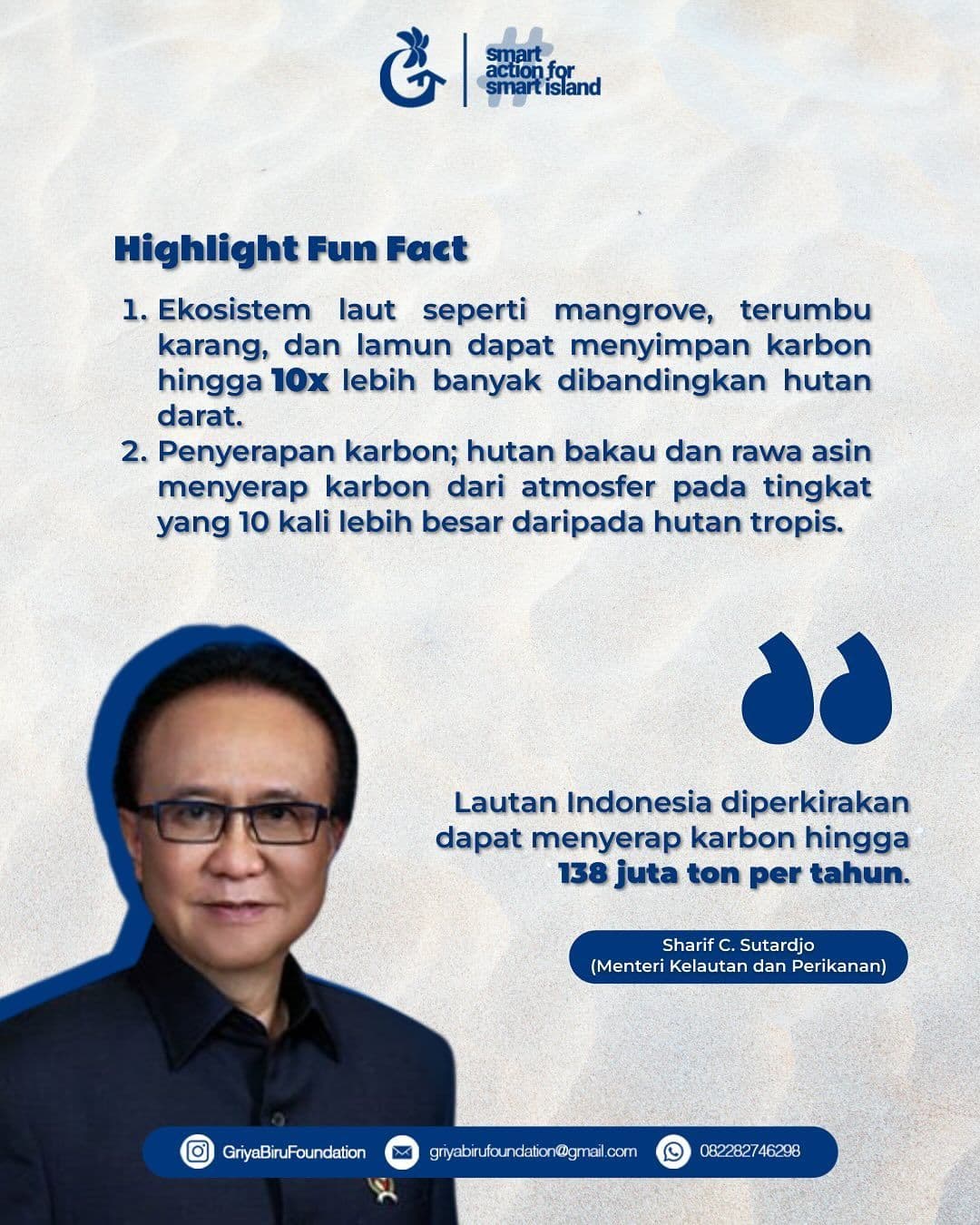
1. Marine ecosystems such as mangroves, coral reefs, and seagrasses can store up to 10x more carbon than terrestrial forests.
2. Carbon sequestration: mangroves and salt marshes absorb carbon from the atmosphere at a rate 10 times greater than tropical forests.
"Indonesian seas are estimated to absorb up to 138 million tons of carbon per year." — Sharif C. Sutardjo (Minister of Marine Affairs and Fisheries)
The importance of protecting marine ecosystems
Damage to blue carbon ecosystems certainly impacts worsening climate change by releasing the carbon stored within these ecosystems into the atmosphere.
Positive impacts for climate & life
Protecting blue carbon ecosystems means we contribute to:
• Reducing global carbon emissions.
• Mitigating the impacts of climate disasters such as sea-level rise.
• Supporting local economies through ecotourism and sustainable fisheries.
_References_
• UNEP (United Nations Environment Programme): https://www.unep.org/resources/blue-carbon
• Blue Carbon Initiative: https://www.thebluecarboninitiative.org
• IPCC Special Report on Oceans and Cryosphere: https://www.ipcc.ch/srocc/
SMART ACTIONS FOR SMART ISLAND!